You have already run a tournament at your club. Player registration, court scheduling, refereeing, prize-giving: the logistics, you’ve got covered. But how many of those participants came back to play the following week? How many followed your Instagram after the event? How many became members?
A padel tournament that is well organised logistically but invisible in marketing terms is a wasted opportunity. The real potential of an event isn’t measured in matches played on the day: it is measured in players acquired, content produced and visibility generated in the weeks that follow.
This guide won’t tell you how to book courts or run the groups. It shows you how to turn every padel event into a concrete marketing lever to grow your club: before, during and after the tournament.
Why a padel event is your best marketing lever
The tournament as a tool to acquire new players
A padel tournament is probably the most effective acquisition channel a club has, and the most underused. A well-marketed event can draw 50 to 100 participants, 30 to 40% of them new players who would never have come through the door otherwise.
The mechanics are simple: a regular player invites a colleague or friend to “give it a go” at the tournament. The competitive but relaxed atmosphere of padel does the rest. The doubles format, accessible even to beginners, lowers the barrier. A tournament is the best entry product you can create, and unlike a standard discovery offer, it creates emotion, social ties and shared memories.
The problem is that most clubs stop there. They run the event, players leave happy, and nobody contacts them again. Without a marketing strategy around the tournament, you lose most of those prospects within two weeks.
Generate high-value content for your social channels
A single well-covered event can feed your social channels for four to six weeks. Atmosphere photos, videos of spectacular points, player interviews, behind-the-scenes Stories, live results, post-tournament highlights: the potential volume of content is considerable.
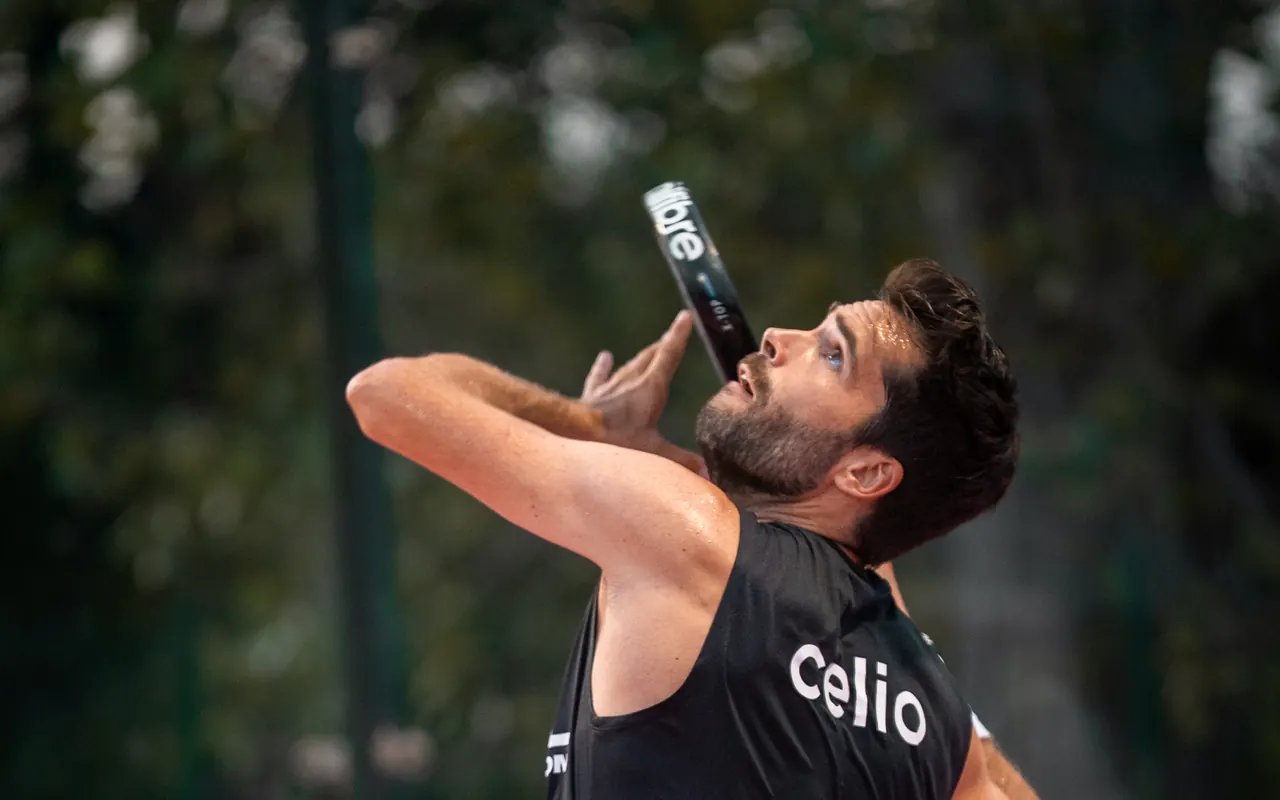
And that content has a value your usual posts don’t: it shows your club in action, with real people, real emotions, real moments. On Instagram and TikTok that is exactly what drives engagement, as we saw with Celio, which went from 0 to 137K followers in 12 months. A Reel of a spectacular padel point filmed at your tournament will always have more impact than a static visual of your opening hours.
The multiplier effect is real: every participant who recognises themselves in a photo or video shares it. Your players become your best content creators, as long as you give them something to share.
Strengthen community and retention
A player who takes part in a club event is no longer just a customer: they are a member of a community. The tournament creates a sense of belonging no monthly membership can reproduce on its own.
Clubs that run regular events (at least one a month) see significantly higher retention than those that only rent out courts. The reason is simple: players come back for the people, not just the sport. And the event is the catalyst for those social ties.
It is also one of the most powerful levers to keep the players at your padel club: turning customers into an active community.
Prepare your communication before the event (D-30 to D-1)
Set your marketing goals (acquisition, awareness, content)
Before posting a single announcement Story, ask yourself: what exactly should this event bring you?
You have three kinds of marketing goals, and they aren’t mutually exclusive:
Acquisition: how many new players do you want to attract? Set a number (for example, 20 new participants who have never played at your club). This goal shapes your communication: you have to reach beyond your existing base.
Awareness: what reach are you aiming for on social? A well-promoted event can generate 10,000 to 50,000 local impressions. If that is your priority, invest in visual quality and partnerships with local accounts.
Content: how many usable pieces of content do you want to produce? If you are aiming for 15 to 20 (Reels, Stories, photos), assign one person to capture on the day.
A tournament without a measurable goal is a nice event, but it isn’t marketing.
Build a multichannel communication plan
Communication for a padel tournament is planned over at least four weeks. Here is the logic:
D-30 to D-21: the announcement. A polished Instagram post (attractive visual, date, venue, format). A Story with a countdown. An email to your player base. Posters at the club.
D-20 to D-8: the build-up. Two to three Stories a week on the preparations. Testimonials from players at previous editions. Presentation of the prizes or sponsors. Targeted email reminders to inactive players.
D-7 to D-1: urgency. “Only X places left.” Final reminders in Stories. Sharing confirmed registrations (with their agreement). Announcing the detailed schedule.
To go further on your club’s social media strategy, see our complete guide to running your padel club’s social media: the principles apply directly to promoting an event.
Turn players into ambassadors
Your regular players are your best promotion channel, and the cheapest. Create a dedicated event hashtag (for example #ClubNameTournament2026) and encourage every registered player to share it on their channels.
Offer a concrete perk to players who bring a new participant: free entry for the referrer, a bonus slot, or an extra prize. User-generated content works because it is seen as authentic: a friend telling you “come, it’s great” has more impact than any advert.
For clubs working with local content creators, an event is also the perfect chance to invite them and benefit from their visibility. A padel creator at your tournament potentially means thousands of views from a qualified audience.
Find local sponsors and partners
A padel tournament is a natural value proposition for local sponsors: physical visibility (banners, goodies, prizes) + digital visibility (mentions on your channels, tags in the content).
Prepare a short partnership deck with three levels of involvement. A simple first level (prizes in exchange for a visible logo + a Story mention). An intermediate second level (physical presence at the event + dedicated content). A premium third level (co-branding of the event + full integration in all the content).
Local shops, gyms, sports nutrition brands and local businesses are your natural targets. The pitch is simple: you offer them visibility with a local, sporty, engaged audience; in return, they fund or provide prizes for your event.
On the day: maximise your tournament’s marketing impact
Produce professional content on the day
On tournament day, your number-one marketing priority is capturing content. Assign one person to it: a team member, a freelance videographer or a player who is comfortable with their phone.
Minimum checklist: a recent smartphone with enough storage, a stabiliser (even a basic one), a power bank, and a clear brief on what to capture: spectacular points, the general atmosphere, player reactions, the prize-giving, social moments.
The formats to favour: vertical video (for Reels and Stories), wide shots of the atmosphere, close-ups of rallies and reactions. Film more than you need; you will sort it afterwards. A ratio of 10 minutes filmed for 1 minute edited is normal.
Run your social channels in real time
During the event, your social channels should move at the pace of the tournament. Real-time Stories: match results, quick player interviews between matches, behind the scenes (buffet prep, warm-ups, scoreboards).
Use the event hashtag consistently. Tag players who have an account. Share Stories from participants who mention you. The goal: a continuous flow that makes those who aren’t there want to come next time.
If you have the resources, an Instagram Live during the semi-finals or final can create an engagement spike. Even 50 live viewers means 50 people connected to your club in real time.
The participant experience: from sport to marketing
Every touchpoint with a participant is a marketing opportunity, without being intrusive.
A photo booth or photo wall with your club’s branding: players take photos and share them spontaneously. A QR code at reception that leads to your Instagram account or WhatsApp group. A quick sign-up form (first name, email, phone) to enter a prize draw: that way you collect every participant’s details.
The goal is clear: everyone at your tournament should leave with a digital link to your club. An Instagram follow, a newsletter sign-up, a number in your WhatsApp group: whatever the channel, what matters is not losing touch with anyone.
After the tournament: turn participants into loyal members
The post-event follow-up sequence
This is where most clubs lose the benefit of their event. Post-tournament follow-up matters as much as the event itself.
D+1: thank-you email. Thank participants, share the results and the best photos. Warm, short, with a link to the full photo album. This first email gets a very high open rate: make the most of it.
D+7: discovery offer. Send a targeted email to new participants (those who aren’t members yet) with a special offer: a free session, a discovery slot, or a discount on the first month’s membership. The message is simple: “We loved having you at the tournament. Come back and try our courts.”
D+14: invitation to the next event. Announce the date of the next tournament or event. Build anticipation. Never let more than two weeks pass without contacting a new player: beyond that, the chance they come back drops sharply.
Use the content over time
One event = at least a month of content. Here is how to recycle what you captured intelligently:
Week 1: video best-of (a 30-second Reel with the best moments). A photo carousel of the results.
Week 2: player interviews or testimonials. A “tournament recap” with the key numbers (participants, matches played, atmosphere).
Week 3: behind the scenes, bloopers, funny moments. Lighter content that shows your club’s personality.
Week 4: a teaser for the next event reusing footage from the last one. “Last time looked like this. Next time will be even better.”
Don’t publish everything in 48 hours. Spread it out to keep engagement going and regularly remind your followers that your club exists.
Measure your event’s marketing ROI
A marketing event you don’t measure is one you don’t improve. Four key indicators to track:
New sign-ups: how many tournament participants became members or booked a slot within the next 30 days? That is your main acquisition KPI.
Social growth: how many new followers did you gain during event week? What was the engagement rate on your tournament posts?
Content volume: how many usable pieces of content did you produce (photos, videos, testimonials)? How many weeks of posting can they cover?
Participant → member conversion rate: the most revealing ratio. If 100 people take part in your tournament and 10 become members, your conversion rate is 10%. The goal: improve that ratio with every event.
For a fuller view of your padel club’s digital marketing strategy, these event KPIs fit into an overall dashboard that measures your whole online presence.
Corporate padel events: a high-potential format
Padel team building as a marketing product
Padel is the team-building sport par excellence: accessible at every level, a doubles format that encourages cohesion, and a controlled duration (1.5 to 2 hours is enough for a memorable event).
For a club, the corporate format is a marketing product with a double impact. On one side you generate revenue (companies pay more than individual players for a turnkey experience). On the other, you expose your club to dozens of employees who would never have discovered padel otherwise, some of whom will come back on their own.
The P500 Coached format illustrates that potential perfectly: a corporate event with professional video capture that generates high-value content. The Limova video, produced in this setting, passed 140,000 views on YouTube: concrete proof that the B2B padel event format produces content that performs well beyond the event itself.
How to pitch a padel event to a company
The pitch rests on three arguments that speak to decision-makers:
Team cohesion: doubles padel mixes levels of the hierarchy and creates natural interactions. The CEO playing with the intern is a moment a traditional offsite will never produce.
An accessible sport: unlike tennis, padel takes 15 minutes to pick up. No employee will struggle. Post-event satisfaction is consistently high.
Usable content: offer the company video and photo capture of the event. They can use it internally (employer brand) and externally (corporate social media). You aren’t selling a tournament, you are selling content and an experience.
For brands looking to associate with a padel or tennis event, our guide to tennis sponsorship in 2026 covers event sponsorship formats, budgets and activation best practice.
You run events but aren’t sure your digital marketing is up to scratch?Book a free call with Arthur, founder of The Court. We look at your social media, website and local search together, and you leave with a personalised action plan.