French tennis is at a turning point. Roland-Garros 2026 (25 May to 8 June) marks the large-scale arrival of content creators in the ecosystem: BNP Paribas, Lacoste, Rolex and Babolat have all run influence operations in the last 12 months.
But behind the buzz, few brand managers know who the French tennis levers really are, how to choose them, and how to measure what a campaign brings back.
This guide gives you the 2026 map of tennis influencers in France, the selection method, and the questions to ask before signing a five-figure partnership. If you want to challenge your tennis approach before signing anything, book a free call with Arthur.
Why tennis is a strategic influence territory in 2026
Roland-Garros 2026: the annual attention peak and the creator opportunity
Two weeks, more than 600,000 spectators on site, and tennis Google searches in France multiplied by 3. Roland-Garros isn’t a tournament like any other: it is the moment national attention converges on the sport. Brands that activate influence ahead of it (1 to 4 weeks before) capture that peak. Those that wait until June to brief their creators always arrive too late.
The Rolex Paris Masters (late October) plays the same role in autumn, with a more Parisian, more premium audience. In between, the US Open and Wimbledon offer activation windows, even if the French audience is less captive.
The French tennis audience: demographics and purchasing power
The French tennis audience has a profile few other sports can claim. Mostly higher-income, 25-55, urban and suburban, with an average e-commerce basket 35% above the national average (source: Roland-Garros advertiser market studies). It is exactly the profile premium lifestyle brands, high-end equipment makers and financial services are looking for.
The audience follows tennis on three main platforms: Instagram for players’ daily lives and lifestyle, YouTube for technical analysis and long-form vlogs, and TikTok for the new generation of fans (18-30) discovering the sport through specialist creators.
Tennis engagement vs other sports on social
Tennis enjoys higher engagement than most team sports on Instagram. Why? Because fans identify with individuals, not teams. Comments are qualified, saves are frequent (technical analysis, equipment advice), and shares stay high during the major tournaments.
On TikTok, 100% tennis content (smashes, rallies, key points) generates engagement rates of 8 to 12% on specialist accounts, double the sports average. That gap is what makes tennis attractive for brands seeking quality visibility.
The brands that get it
BNP Paribas is a long-standing Roland-Garros partner and has multiplied creator operations over the last 18 months, notably through its We Are Tennis platform. Lacoste invited several lifestyle creators to the 2025 tournament (Mayadorable, Isia, Isaak Dessaux, Louise Rgt) with a post-event editorial capsule mechanic. Rolex activates its player ambassadors without ever overloading their personal accounts. Babolat, HEAD and Wilson activate their equipment creators in “product in use” mode rather than frontal advertising.
What they have in common: none of these brands treats tennis influence as a commodity. They invest in a brief and a framework, and leave the creator the editorial freedom that makes the content credible.
The 3 main families of tennis influencers in France
Family 1: French ATP/WTA players
Active pro players are the first family of tennis influencers. Their audience is native to the sport, their credibility is maximal, and their image benefits automatically from any sporting result.
The constraints are real. A competition calendar locked 11 months a year, rare filming windows, agents filtering briefs, equipment exclusivities already signed (Babolat, HEAD, Wilson, Yonex, Asics, Nike and Adidas share almost the whole ATP/WTA top 100). Activating a pro player is expensive (rates start at €25,000 for a simple activation with a French top-100 player and explode beyond the top 50).
Ideal for: maximum credibility, technical product launches, an institutional Roland-Garros presence.
Family 2: specialist tennis creators
The most dynamic family in 2025-2026. These are creators whose content is 100% tennis: analysis, tournament vlogs, technique, equipment, athlete lifestyle. They post 3 to 5 times a week, keep strong editorial freedom, and offer a manageable calendar fit (no ATP constraints).
This family offers brands the best performance-to-budget ratios. Audiences range from 20,000 to 200,000 Instagram followers, with real engagement rates (3 to 8%) far above pro players (often below 1.5%).
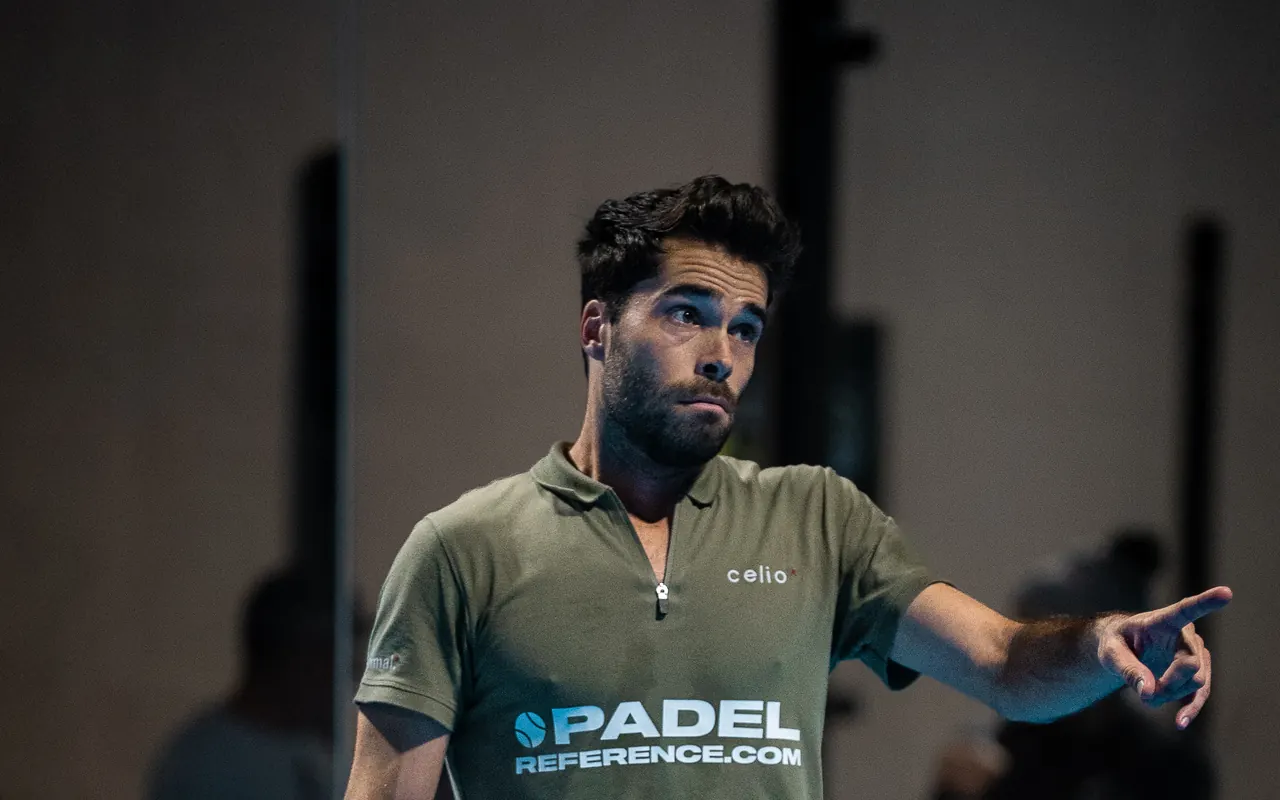
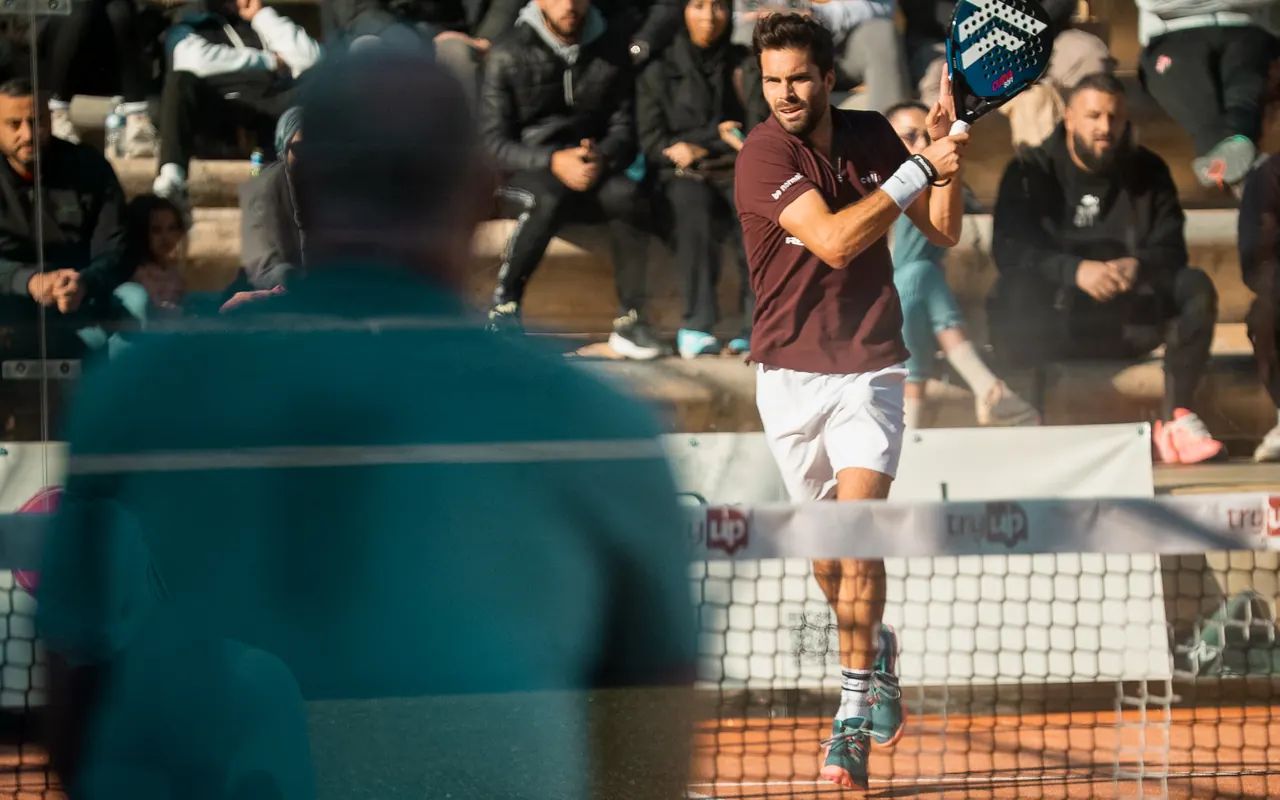
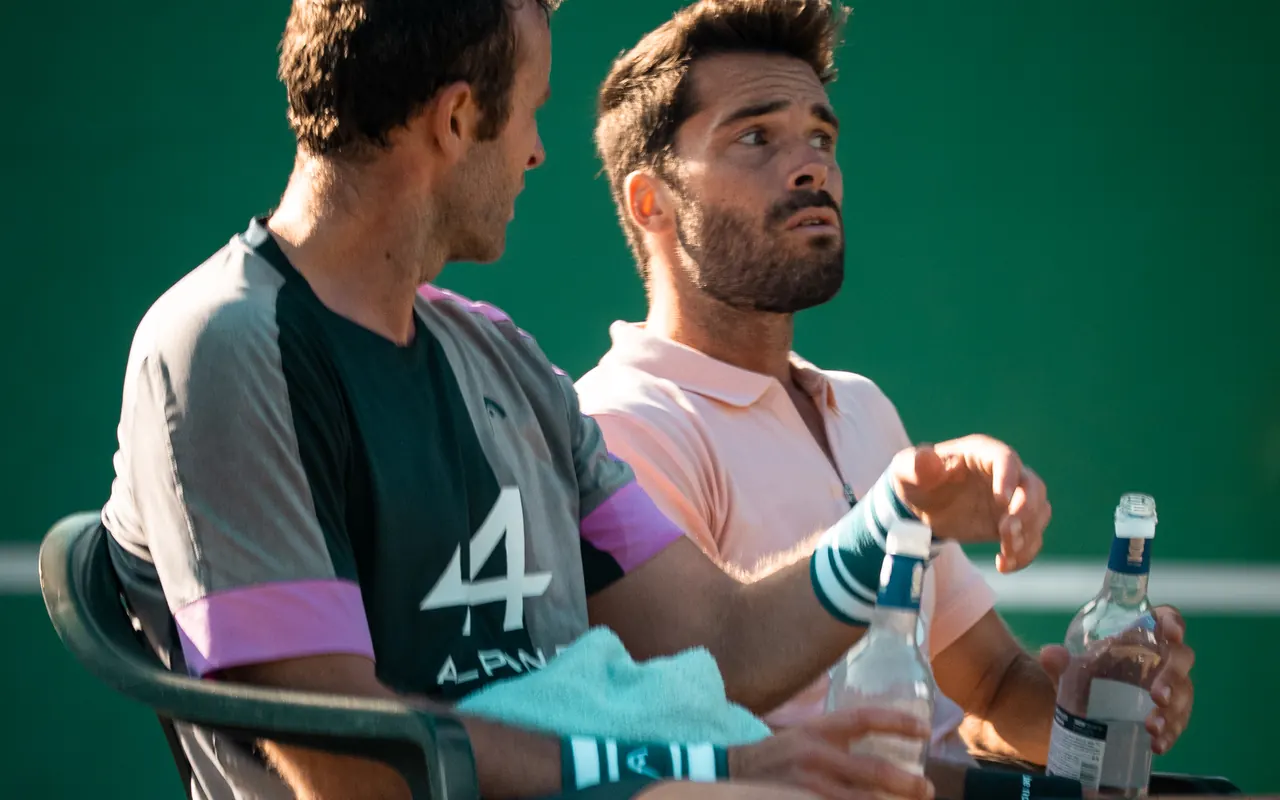
The Court’s tennis roster (Gatien and Maëlie) belongs to this family. Both are sponsored by HEAD and Extreme Tennis. That sponsor structure confirms one thing: premium equipment brands are actively investing in this family.
Ideal for: editorial capsules, long-term ambassadorship, product content, recruiting a qualified audience.
Family 3: lifestyle creators who reach the tennis audience
These creators aren’t 100% “tennis-positioned”, but their audience strongly overlaps the tennis target: fashion, elegance, beauty, premium events, art de vivre. Tennis brands activate them around events (Roland-Garros, Rolex Paris Masters) to carry a lifestyle message rather than a purely sporting one.
The Lacoste and BNP Paribas cases at Roland-Garros 2025 (Mayadorable, Isia, Isaak Dessaux, Louise Rgt) illustrate this approach perfectly. The goal isn’t to talk tennis to tennis fans. It is to talk tennis to fashion and lifestyle audiences, widening the brand’s prospect base.
Ideal for: PR events, fashion capsules, reaching audiences beyond sport, cross-target operations.
When to activate which family
The simple rule: brand goal × budget × calendar.
Goal of technical credibility (racket or shoe launch)? Family 1 or 2, with a preference for 2 if the budget is under €50,000.
Goal of event awareness (Roland-Garros, Paris Masters)? Family 3 if the angle is lifestyle, Family 1 if the angle is pure performance.
Long-term goal (12-24 months of ambassadorship)? Family 2 in 90% of cases. It is the only one where posting frequency and editorial freedom allow real compounding.
The 2026 map: the key faces of French tennis influence
Specialist tennis creators: Gatien and Maëlie
Gatien established himself in 2024-2025 as one of the most engaging French tennis accounts on TikTok, with more than 12 million cumulative views over 365 days and an audience that is 69% male, mostly 25-44. His angle: accessible technical analysis, tournament vlogs, equipment content. He is under contract with HEAD and Extreme Tennis for 2026.
Maëlie completes the duo with an Instagram and TikTok audience skewed female, in duo and solo formats. She is also under contract with HEAD and Extreme Tennis. What sets her apart: a lifestyle take on tennis that opens the door to cross-target activations (fashion, beauty, sport).
Their shared strength: a free calendar (no binding ATP/WTA tournaments), strong video production capacity, and a deliberate editorial alignment with brands (collaborative briefs, no imposed scripts).
Former players turned creators
Henri Leconte, Gilles Simon, Benoît Paire and several former top-100 players have moved into a second life as creators since 2023-2024. A broader but less purely tennis audience: their fans follow the person as much as the sport. Dominant formats: podcasts, ATP tour behind-the-scenes vlogs and TV analysis.
Ideal for brands that want historic authority + a relaxed tone: financial services, automotive, men’s lifestyle. Avoid if the goal is to reach the new generation of tennis fans (18-30), who consume specialist creators more.
Lifestyle creators invited to Roland-Garros 2025
The 2025 class of creators invited to Roland-Garros set a new standard. Mayadorable × BNP Paribas co-produced a web series mixing the tournament and its backstage. Isia, Isaak Dessaux and Louise Rgt carried the Lacoste capsule with an elegance and art-de-vivre angle. These operations reached fashion and lifestyle audiences well beyond the core of tennis fans.
Worth watching closely for Roland-Garros 2026: the same kind of creators will be activated again, along with newcomers just waiting for a solid brief. Their availability is limited and their rates rise quickly. Briefing between January and March is the healthy window.
The new TikTok tennis wave 2025-2026
About ten French TikTok accounts under 100,000 followers have emerged in tennis in 18 months, sometimes with higher engagement than the big accounts. Ultra-short format (15 to 30 seconds), technical or humour focus, an 18-28 audience.
They cost little (€1,500 to €3,000 per piece), bring a freshness established accounts no longer have, and let you reach the Gen Z discovering tennis. Test them as a complement to a main setup, never as a replacement.
How to choose the right tennis influencer for your brand: 6 criteria
Audience fit
Follower count tells you nothing. What counts is the audience’s real make-up: age, gender, geography, secondary interests. An account with 100,000 followers of whom 60% are abroad and 30% are bots isn’t worth an account with 20,000 followers who are 90% French and 100% tennis.
Always ask the creator or their agency for platform insights (Instagram, TikTok, YouTube). Compare them with your target. The rule: at least 70% fit on the key criteria (age, gender, geography).
Editorial fit
Your tone of voice has to be able to live alongside the creator’s world. A premium technical brand won’t survive in a purely humorous world, and conversely a relaxed lifestyle brand wears itself out in an ultra-serious one.
Try this: take the creator’s last 10 posts and imagine your product or message inside them. If it grates, they aren’t the right partner.
Calendar fit
Roland-Garros (25 May to 8 June 2026), Rolex Paris Masters (late October), Wimbledon, US Open: if your campaign is tied to a tournament, check that the creator is available and suited.
Pro players have calendars locked 11 months ahead. Specialist creators are free, but get booked quickly for the Roland-Garros and Paris Masters weeks. Brief 8 to 12 weeks before the event.
Sector exclusivities
A creator already signed with an equipment brand can’t represent a competitor. It is the basic rule of sports influence. Babolat, HEAD, Wilson, Asics, Nike and Adidas share the market and lock in their creators for 12 to 24 months.
The same rule applies to financial services (BNP Paribas vs Société Générale vs Crédit Agricole in sports sponsorship), drinks (Red Bull, Powerade, Gatorade) and premium lifestyle brands.
Always ask for the list of current sponsors and ongoing exclusivities before signing. A good agency gives you this document without you having to ask.
Video production capacity
Video is the number-one format on YouTube and TikTok. A creator who only produces Instagram photos mechanically limits your reach. Check the frequency and quality of their video over the last 30 days.
In family 2 (specialist creators), a good creator publishes 3 to 5 videos a week, edits themselves or with an editor, and masters short formats (TikTok, Reels) and long ones (YouTube). That is what justifies a higher rate.
A track record of activations with numbers
Ask for the KPIs of 3 past campaigns. Views, engagement rate, clicks, conversions if tracking was in place. A creator who refuses to share these numbers generally has something to hide.
A serious agency provides an up-to-date media kit, with named concrete cases (brand, period, format, results) and screenshots of platform insights.
The 3 tennis activation models in France
Roland-Garros or Rolex Paris Masters event: the short, intensive capsule
Format: 1 to 2 weeks of content around the tournament, a mix of Reels + Stories + posts + a YouTube video if a long format makes sense. PR mechanic: tournament accreditation, backstage access, capturing “insider” moments.
Model case: BNP Paribas × Mayadorable at Roland-Garros 2025. A co-produced web series, native integration into the tournament, a long storytelling format. The result: a lifestyle audience discovering BNP Paribas’s tennis ecosystem, and a brand stepping outside its usual perimeter.
This model suits brands that want a concentrated visibility peak, with a measured content investment and timing aligned to an event.
Off-tournament lifestyle capsule: the co-signed collection
Format: 3 to 5 pieces rolled out over 4 to 8 weeks, outside tournament periods. Mechanic: a co-signed product collection, a lookbook, an editorial series (fashion, art de vivre, tennis travel).
Model case: Lacoste × invited creators at Roland-Garros 2025. An elegance lifestyle concept, a mix of players and lifestyle creators, rolled out over the Roland-Garros weeks and beyond.
This model suits premium fashion and lifestyle brands that want to anchor their link to tennis without depending on the sporting calendar.
Long-term ambassadorship: the compounding investment
Format: a 12 to 24-month partnership, at least 1 to 4 pieces a month, recurring product integration, sector exclusivity. Mechanic: equipment or premium lifestyle, or both.
Model case: HEAD × Gatien and Maëlie. Monthly content, presence at key events (tournaments, trade shows), category exclusivity. It is the model that creates the most value over time, provided you have the brief and the budget to hold it for at least 12 months.
This model suits brands that want to build a lasting share of voice in tennis rather than buy one-off visibility.
The KPIs to demand from a tennis influence campaign
Visibility KPIs: impressions, video views, reach
The basic metrics. Impressions, video views, reach, organic reach. Necessary but not sufficient. A million impressions with no engagement is failed display advertising.
Video views are the most telling in 2026: 3-second views (TikTok, Reels), 30-second views (YouTube), completion rate on long formats.
Engagement KPIs: real rate, comments, saves
Engagement rate is the number-one audience quality indicator. Good tennis content on Instagram goes above 4 to 6% engagement; on TikTok, look for more than 8% on well-performing videos.
Also look at comment quality (qualified comments > emojis), saves (proof the content has practical value) and shares (proof the content is breaking out of the creator’s algorithmic bubble).
Business KPIs: clicks, promo codes, leads, sales
What you are really paying for. Outbound clicks from the bio or link sticker, tracked promo codes, leads through a dedicated form, attributed sales over the 7 to 30 days after the content.
Set up tracking upfront. A unique UTM per creator piece, a dedicated promo code, a tracked landing page. Without that, you will have no ROI reading at the end of the campaign.
The hidden metric: share of voice over 6-12 months
The metric tennis brands use least. The brand’s share of voice in tennis, measured over 6 to 12 months, gives the true picture of an influence strategy’s compounding.
Tools: Brandwatch, Talkwalker, Meltwater, or simply a custom dashboard aggregating tennis social mentions + share of voice vs competitors. It is the KPI that justifies long-term ambassadorship over one-off activations.
A concrete case: Lacoste, BNP Paribas and Roland-Garros 2025
Lacoste × invited creators at Roland-Garros 2025
Lacoste invited several lifestyle creators to Roland-Garros 2025 (Mayadorable, Isia, Isaak Dessaux, Louise Rgt) around a simple mechanic: tournament accreditation + editorial capsule + co-signed collection.
The goal wasn’t to sell tennis to tennis fans. It was to sell the Lacoste way of life to a fashion and lifestyle audience, using Roland-Garros as a cultural backdrop. The brand reached audiences it doesn’t reach through classic PR activations.
Lesson for 2026: brief 8 to 12 weeks before the tournament, plan content before, during and after, and let creators tell their experience rather than scripting it.
BNP Paribas × Mayadorable
BNP Paribas co-produced a web series with Mayadorable around Roland-Garros 2025. A long storytelling format, native integration into the tournament, a pre-tournament + during + post-tournament debrief mechanic.
The most interesting result isn’t the number of views. It is that the brand extended its Roland-Garros story over 4 to 6 weeks, while its classic TV activations go quiet the moment the final ends.
Lesson for 2026: plan a post-tournament traffic capture plan (dedicated newsletter, retargeting, evergreen content on YouTube). Without it, you pay for a peak and get nothing from it 30 days later.
Lessons for your brand for Roland-Garros 2026
Three operational lessons. First, book your creators between January and March at the latest. The best are signed from April. Second, plan a post-tournament content budget equal to 30% of the event budget, so you don’t burn everything in 15 days. Third, measure share of voice at 6 months, not just the immediate KPIs.
How much does a tennis influence campaign cost in 2026
Market orders of magnitude
The ranges below are orders of magnitude for the French market, excluding premium or exceptional cases.
Roland-Garros or Paris Masters event capsule (1 to 2 weeks, a mix of Reels + Stories + 1 YouTube video): €10,000 to €30,000 per family-2 creator (tennis specialist). Allow €50,000 to €150,000 for a French top-100 ATP/WTA player, more for the top 50.
Off-season content series (3 to 5 pieces over 4 to 8 weeks): €10,000 to €25,000 per family-2 creator. The brand gets a better views-per-euro ratio than during tournaments (less editorial competition).
Long-term ambassadorship (12 months, 1 to 4 pieces a month, sector exclusivity): €30,000 to €100,000 a year for an established family-2 creator. More for premium profiles or dual equipment + lifestyle contracts.
How a good agency justifies its fee
An agency doesn’t just sell content. It sells a selection framework, controlled production, rigorous measurement and the negotiation of image rights.
The lines that justify an agency fee: briefing the creator, collaborative script sign-off, supervising the shoot, editing if delegated, client sign-off, KPI guarantees, post-campaign reporting, and negotiating image rights for your paid media reuse.
Pricing traps to know
Opaque production fees: an agency that doesn’t separate the creator’s fee from production costs often hides a non-transparent margin. Ask for the breakdown.
Badly negotiated image rights: if you want to reuse creator content in paid media (Instagram Ads, YouTube Ads), the rights must be negotiated upfront. Paid use without rights is expensive to put right.
Unpriced exclusivity: sector exclusivity has a cost. If it isn’t explicitly priced, it isn’t guaranteed.
Mistakes to avoid when launching your first tennis campaign
Choosing a creator on followers, not views. Follower count is a vanity metric. The video view (3s or 30s depending on the platform) is the real unit of value in 2026. Compare median views over the last 30 days, not the peaks.
Imposing an advertising script. The best influence content is co-created. You give a brief, a framework, key messages. The creator writes. Impose a word-for-word script and you get badly disguised advertising, and your KPIs collapse.
Launching a Roland-Garros campaign with no post-tournament plan. The tournament lasts 15 days, but your brand needs to capitalise over 6 months. A dedicated newsletter, retargeting, evergreen content, running a digital community to carry it on. Without that, you pay for a peak and everything falls back.
Ignoring sector exclusivities. Activating a HEAD creator for a Babolat operation puts you in a legally awkward position and loses the creator’s trust. Always ask for the list of current sponsors and ongoing exclusivities.
Confusing pro players and creators. A player can be a terrible content creator, and an excellent creator may never have been a pro. The two families serve different goals. Don’t substitute one for the other for budget convenience.
Asking the creator to “sell” instead of “tell”. Direct selling burns trust. Storytelling builds the brand. Brief on the story to tell, not the product to push.
Padel or tennis: multi-sport or specialist agency?
The padel × tennis bridges
Padel and tennis share a large part of their audience, their equipment brands (Babolat, HEAD, Wilson, Asics) and cross-over events. A brand investing in one can often activate the other with shared logistics.
That is what pushes many advertisers to look for a partner that can operate both sports under one roof, rather than multiplying agencies.
When multi-sport is an asset
For equipment brands present in both disciplines (Babolat, Wilson, HEAD, Lacoste), for cross-cutting lifestyle brands, and for financial or telecoms services speaking to the “racket sports” core target, a multi-sport partner limits coordination costs and speeds up roll-out.
The risk: a generalist sports agency that masters neither padel nor tennis will make you pay for its learning. Look for explicit racket-sports specialisation, not a generalist adding tennis as an option.
When specialisation wins
For pure tennis brands that don’t touch padel (a tennis-only equipment maker, an institutional Roland-Garros or Paris Masters event, premium tennis services), pure tennis specialisation can make sense. But how rare such agencies are in France pushes them towards padel + tennis structures.
The Court’s model
The Court runs padel and tennis under one roof, with a dedicated creator roster per sport. The tennis creators (Gatien, Maëlie) are positioned on tennis and only tennis. The padel creators are positioned on padel. No opportunistic crossover: each creator stays true to their territory to protect their credibility with their audience.
That model lets a brand start in padel and then widen to tennis (or the reverse), with a single point of contact and a consistent digital marketing strategy across both sports.
Roland-Garros 2026: time to brief your activation
Tennis is the premium sports influence lever of 2026. A qualified audience, higher engagement rates, a two-week, high-impact Roland-Garros peak, specialist creators on the rise: every light is green for brands that want to move into this territory.
But choosing the creator is more critical than ever. The wrong choice is expensive (in budget, image and time), and the booking window for Roland-Garros 2026 closes by late spring. The right time to brief a tennis activation is now.
The Court supports racket-sports brands with a dedicated tennis creator roster, a proven selection method and a clear measurement framework. We run padel and tennis under one roof, with a full range of agency services for brands that want to build lasting loyalty rather than buy one-off visibility.
For brands that want to test the tennis creator angle before signing a heavy setup: Arthur, founder of The Court, will spend 30 minutes with you understanding your target, mapping the relevant tennis creators, and identifying where you can activate from the autumn 2026 season.
It’s free, it’s concrete, and we don’t bite.